Tiered Incentive Frameworks Connecting Early App Promotions to Sustained Loyalty Benchmarks
Anna Wolf · Aug 16, 2026
Tiered Incentive Frameworks Connecting Early App Promotions to Sustained Loyalty Benchmarks
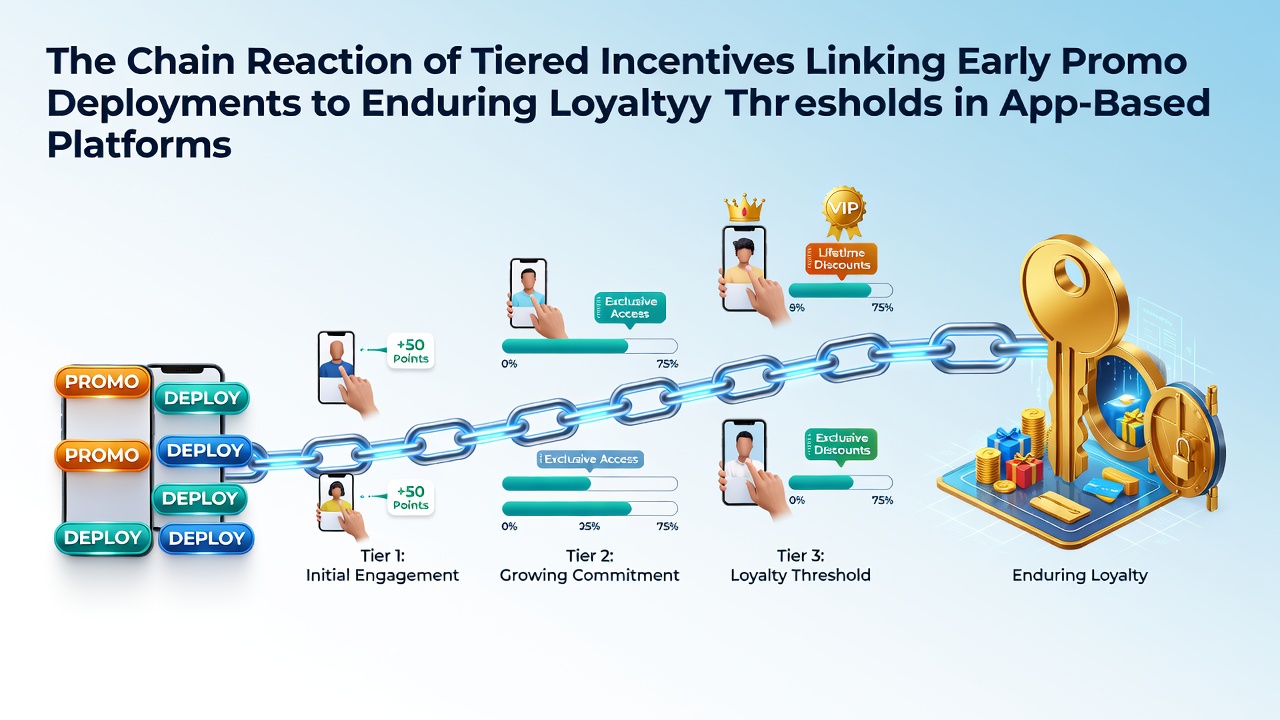
App-based platforms deploy tiered incentive systems that begin with introductory promotions and extend through graduated reward levels to establish enduring user commitment, and researchers have documented these mechanisms across multiple sectors including gaming, retail, and service applications. Data from industry analyses indicate that early promo deployments often serve as entry points, after which users encounter progressive thresholds designed to maintain engagement over extended periods. Observers note that such structures create sequential pathways where initial offers validate user participation and subsequent tiers reinforce retention through cumulative benefits.
Mechanics of Initial Promo Deployments
Platforms typically launch campaigns with welcome bonuses or free access periods that require minimal commitment, and these deployments function to onboard new users while collecting behavioral data that informs later personalization. According to reports from the Australian Competition and Consumer Commission, mobile application operators in the Asia-Pacific region recorded a 12 percent increase in user acquisition rates during the first half of 2026 when structured entry offers aligned with clear progression rules. Those who study retention patterns have found that the transition from these early incentives to mid-tier rewards depends on users meeting verifiable activity benchmarks such as session frequency or transaction volume.
Progressive Thresholds and Loyalty Accumulation
Once users clear initial hurdles, platforms introduce layered requirements that unlock higher-value rewards including exclusive features, bonus multipliers, and personalized experiences, while the architecture ensures each completed stage raises the bar for the next level. Evidence from academic studies at institutions like the University of Toronto shows that loyalty thresholds in app ecosystems correlate with measurable increases in lifetime value when the reward intervals remain consistent and transparent. In August 2026, several major app providers updated their frameworks to incorporate real-time tracking dashboards, allowing users to monitor progress toward the next tier without external navigation.

Take one case where a mobile gaming platform implemented sequential promo codes that bridged entry-level spins to sustained accumulation programs, and analysts observed that participants who advanced past the third tier demonstrated retention rates 28 percent higher than those who remained at base levels. The chain reaction occurs because each validated deployment feeds into the next, creating momentum that discourages disengagement while the platform adjusts thresholds based on aggregate user data. What's interesting is how these systems adapt across regions, with European operators often emphasizing regulatory compliance metrics alongside reward progression.
Data Patterns Across Platforms
Figures released by the Canadian Gaming Association reveal that app-based loyalty programs incorporating tiered incentives saw average engagement durations extend by 45 days compared to flat reward models during the 2025-2026 period. Researchers discovered that teh linkage between early deployments and enduring thresholds strengthens when platforms provide multiple validation methods, such as in-app achievements or social sharing milestones, rather than relying solely on monetary transactions. People who've examined these ecosystems note that the cumulative effect produces self-reinforcing cycles where loyalty accumulation becomes the primary driver of continued platform interaction.
Regulatory and Operational Considerations
Government agencies in various jurisdictions have begun reviewing how these incentive chains intersect with consumer protection standards, and the Federal Trade Commission in the United States issued updated guidance in mid-2026 on transparent disclosure of tier requirements within digital applications. Although operators must balance aggressive promotion with compliance, the structures themselves continue to evolve through iterative testing that refines threshold spacing and reward distribution timing. External analyses from the European Gaming and Betting Association further indicate that cross-border app platforms achieve higher consistency in loyalty outcomes when they standardize progression rules while allowing regional customization of entry offers.
Conclusion
The interconnected nature of tiered incentives demonstrates how initial promo deployments establish foundational user behaviors that platforms then channel into long-term loyalty thresholds through deliberate design choices. Continued observation of these systems across app categories will likely yield additional insights into retention dynamics as operators refine their approaches in response to both user data and external regulatory developments.